SOLAR VOCABULARY
A quick tip: check out some vocabulary you should know when looking at solar. Note, below are basic concepts and not an in-depth or exhaustive explanation for each piece of your new solar system.
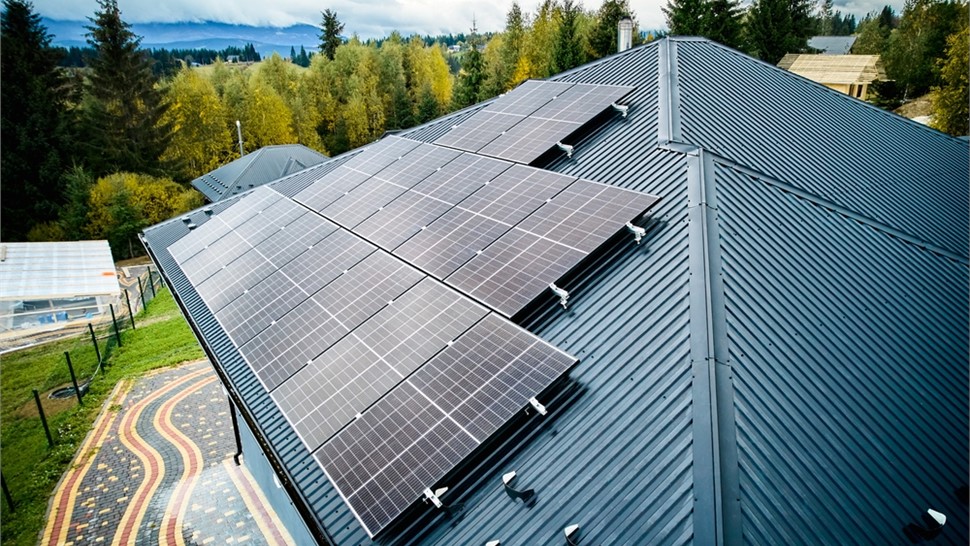
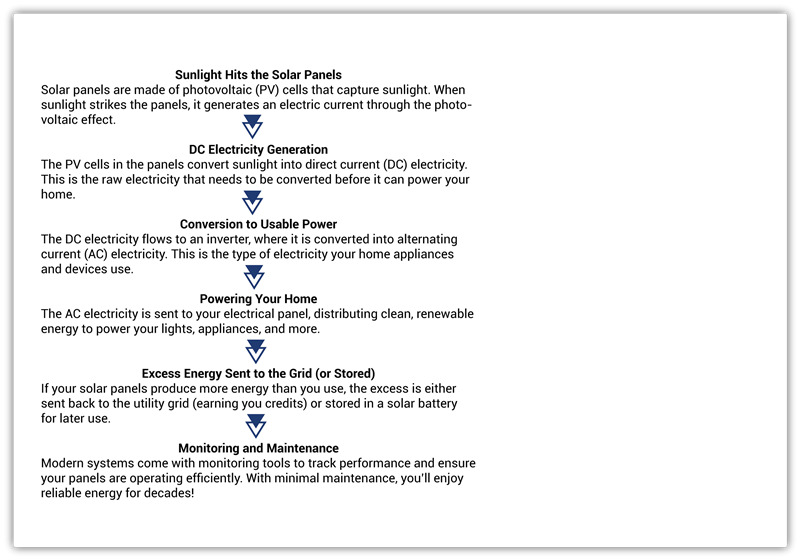
Solar Panel, a.k.a. Solar module, or just module. – These are the panels installed, usually on your roof, to collect solar energy. When the sun shines on your roof, the sun’s energy, in the form of photons, hits the solar cells in your panel. The design of the solar cell converts the sun’s light into electricity through a photovoltaic effect. Thus a PV solar panel.
Inverter – the electricity generated by your solar panels is direct current (DC) and needs to be converted, or inverted into alternating current (AC) so it can be used in your home and by all your appliances.
Electrical Panel – the energy passing through the inverter is then directed to your electrical panel, usually outside your home, that feeds energy to your home and appliances. Excess energy flows through your electrical meter and back into your neighborhood power grid. Again, this is a very basic explanation. We have not touched on battery or storage options. If your panel is too old or too small your new solar system may require a “main panel upgrade” or MPU where an electrician upgrades the guts or your electrical panel.
Electricity Meter – Most of us are familiar with the concept of the electrical meter outside our home that your utility company uses to monitor how much electricity we use so they can bill us. Almost all of us along the Colorado front range now have a new “smart” meter that is way more accurate and allows for your friendly utility to bill you MORE during their “time of use” programs (smart meter).
Net Metering – A “net meter” is a bi-directional meter that tracks how much energy you pull from the electrical grid (your utility company) and how much energy you push or provide (or sell back) to the utility company. If you use more energy than your solar system produces then it will track how much energy you use from the utility company’s grid above and beyond what your solar system produces. If you produce more than you use then you will receive a credit for how much energy you provide to the grid. Thus it keeps track of the “net” usage for your home. You need to look at solar now before the 1:1 net metering relationship is reduced or eliminated. Seriously, don’t wait!
The Grid – When people talk about “the grid” in the context of residential solar we are essentially referring to the utility company’s infrastructure that supplies energy to your home, neighborhood, local businesses, and surrounding areas (city, county, etc.). Generally speaking, if you do not have solar, then all your electricity comes from the grid. If you do have solar then you are feeding energy into the grid when you’re not using it and pulling from the grid when you do use it (like at night, when you’re home from work). This energy is used, produced, and tracked on the grid in units of kilowatt-hours (kWh).
Solar System – Do you remember in 4th grade when your science teacher taught you about the sun, the planets, and our solar system? It was pretty exciting back then to learn about stars and planets and orbits. When Valor talks about solar systems it gets even more exciting because we are talking about an energy-producing asset that takes advantage of unused space on your roof that can lock in your electrical bill before it goes up again, saving you tens of thousands of dollars over the next twenty-five years, increase the value of your house, and grants you the title of a hero for doing your part to build a sustainable, renewable energy future for the planet. Whew! How’s that for a run-on sentence?
There is a lot more to know. We could talk about watts, kilowatts, shading, maximum system sizes for your area, and more. What is important is whether or not solar on your home makes sense for you and your family’s situation. If you’re curious, just send us a note. One of our reps can prepare a complimentary, custom-designed proposal based on your electrical usage.